Important Information: Acclimatization on Kilimanjaro
Acclimatization is the process of your body adjusting to the decreased availability of oxygen. At the summit of Kilimanjaro, each breath contains roughly 48% of the oxygen found at sea level.
- The "Climb High, Sleep Low" Strategy: The 6-day itinerary follows this gold-standard medical protocol. By spending the third day hiking to 4,000m and returning to 3,700m to sleep, you force your body to adapt without the stress of staying at a dangerous altitude.
- Hydration & The Kidney Response: High altitude acts as a natural diuretic. You must drink 4 liters of water per day to help your blood circulate oxygen efficiently and to assist your kidneys in balancing blood pH levels.
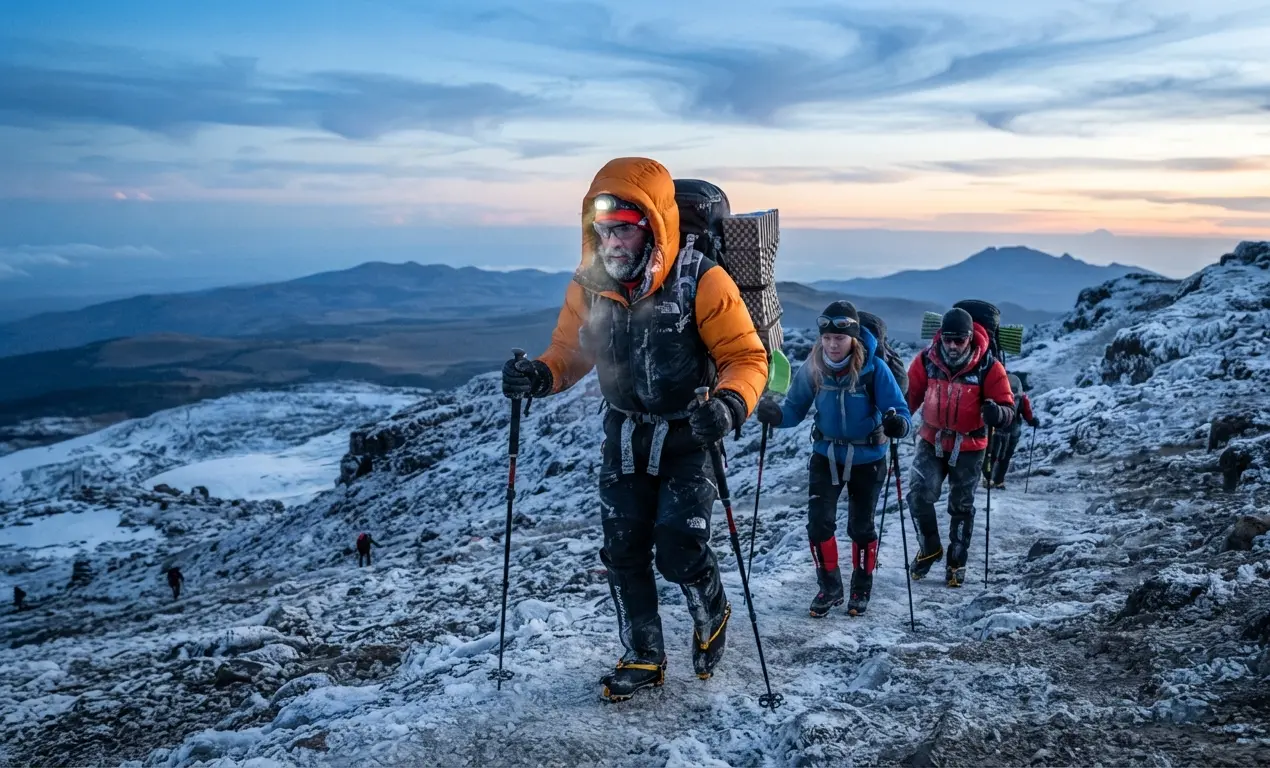
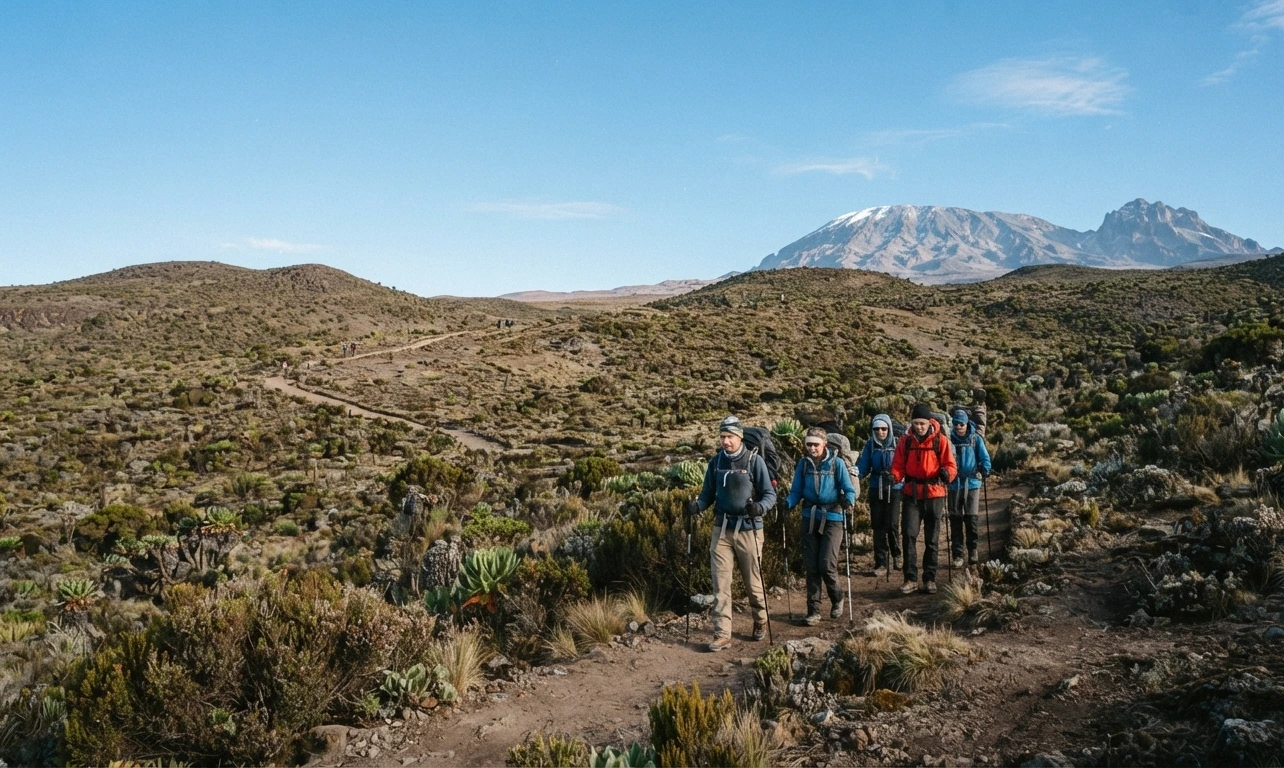
- The "Pole Pole" Principle: Moving slowly isn't just about saving energy; it prevents your heart rate from spiking. A high heart rate at altitude prevents the efficient exchange of gases in the lungs, increasing the risk of High Altitude Pulmonary Edema (HAPE).
- Health Checks: Authoritative guides use Pulse Oximeters twice daily. A resting oxygen saturation (SpO2) above 80% is excellent; if it drops below 65%, expert intervention or descent is usually required.